
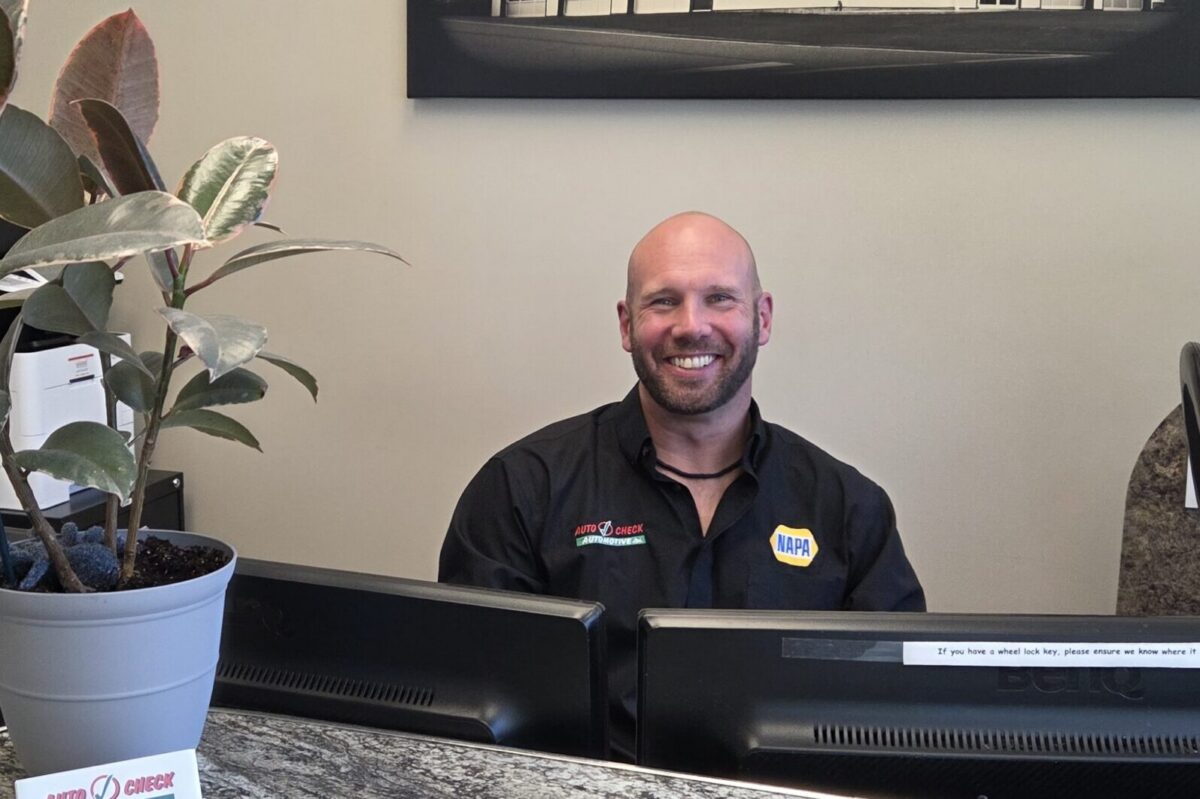
Stefan Kennett of Auto Check Automotive in Nanaimo, B.C.
By Lois Tuffin
When Stefan Kennett took over Auto Check Automotive in Nanaimo, B.C., from its founders, he kept many things that made the shop succeed.
Naturally, he carried on the morale-building barbecues, where the staff wraps something new in bacon each Friday. Oreos tasted pretty good, he reports, although the staff prefers chicken and pineapple.
Those lunch hours also serve up a “comedy hour,” with a closeknit staff teasing each other around the table.
“The previous owner ran things the way I like them,” says Kennett, who has worked in shops for 26 years. “A good culture is necessary.”
Yet the business has changed since he bought it in 2018. Thanks to changes at the front counter in particular, it has become more profitable.
“We’re working smarter,” Kennett says. “We’re pre-selling work, rather than waiting for people to show up.”
Every savvy shop owner knows service advisors serve as ambassadors and automotive lingo translators with customers. By building trust while explaining pricing, their interactions lead to loyalty and good reviews.
In Kennett’s case, he trained as a service advisor after falling out of love with working under a hood at a Ford dealership. After stints in heavy equipment and motorcycles, he started at Auto Check 14 years ago.
Already a Red Seal technician and a university business management graduate, Kennett learned more from Ron’s wife and business partner Karen for two years after buying the shop.
Once on his own, Kennett hired a second service advisor and taught staff to look up maintenance timelines leads and to schedule customers for future work.
They tap into MasterTech.AI to search Auto Check’s records, CARFAX and other systems, to generate a list of upcoming work due. It takes one second and transparently shows the customer what they need without coming across like an upsell, Kennett says.
By getting off the shop floor, he found the shop made as much money with four techs after a fifth one left. Over the past year, his car count has dropped from 350-plus cars a month to 280. Meanwhile, his average repair order went from $400 to $540, boosting the shop’s profits.
“That was my goal,” Kennett says. “You don’t want to do seasonal tire changes 16 times a day. You can actually grab a coffee and think about things during a transition. The techs are happier and it’s easier to manage with less shuffling.
“Your front end controls your day. If your service advisor is on fire, you cannot talk to them. Now, the techs’ days are filled better and we have better income.”
Doing the math
If you doubt the return on investment in another pro at the counter, business coach Murray Voth at RPM Training breaks it down clearly. He estimates the average tech bills 4.2 hours per day, when they could invoice eight.
In an average day, shops lose:
· 1 hour talking between the bays and the front;
· 1 hour awaiting parts;
· 1 hour in lost labour due to mistakes or rusted/seized bolts;
· 1.6 hours for unbilled diagnostic and testing.
The answer isn’t blaming or hiring more techs, he says. Instead, invest in one support person per one to two techs, and you’ll see your average report order rise.
“Techs are like surgeons and bays are like operating rooms,” he says. “Service advisors are like nurses who hand them scalpels. They schedule for them and provide everything they need.”
While accountants may encourage shop operators to cut staff costs, that math doesn’t apply to the aftermarket, Voth adds.
“They don’t understand the industry,” he says. “We sell time and we save time compared to what we bill.”
He has seen burnt-out owners finally get time to breathe by bringing in another person to write service orders. If they train them well, the business tends to thrive.
A less frazzled greeter will take the time to ask questions like, “Any changes since the last time you were in?” By learning about a new sound or dashboard light, they can book two tasks, so the tech works more efficiently.
If even a small shop can bill 0.4 more hours in labour per invoice, it can pay for the additional service advisor salary within a year. If they commit to that salary up front, their profits will rise sooner — possibly within the first month.
“It’s a chicken-and-egg scenario,” Voth says.
Winning in Winnipeg
Meanwhile, Pam Sitar proves that a good service manager can come from in-house or the most unlikely places. She forged a new career at Fountain Tire along Winnipeg’s Henderson Highway after her Mazda Protégé 5 needed a new tire in 2005.
On her next visit, she told assistant manager Jason DiBartolo she needed an oil change and a job. Here’s her pitch: “You should hire me because I’m like Cheez Whiz. I add personality.” (Remember that 1970s ad slogan?) He gave her the employee discount on the spot.
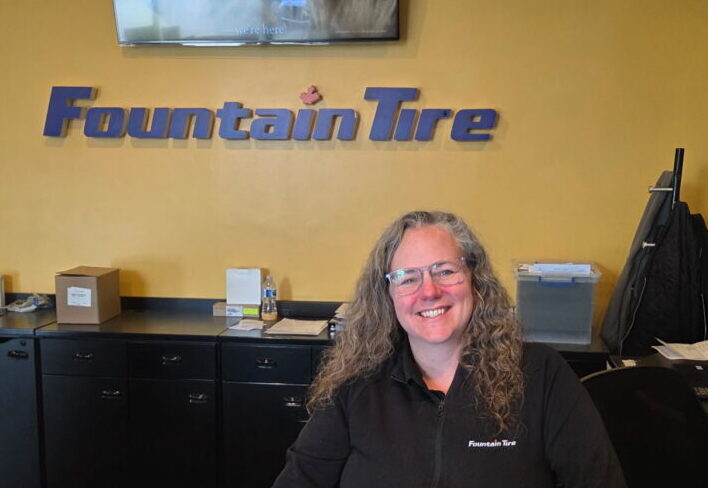
Pam Sitar proves that a good service manager can come from almost anywhere.
After her first year at the counter as assistant manager under DiBartolo in 2018-19, the store won the title of Most Improved within the company. By “following the money,” the shop’s profits have increased — thanks to Sitar tracking credits, and keeping parts inventory, returns and warranty details up to speed.
As the face of the shop, Sitar loves to connect with customers, often via hugs. She knows what kind of dogs they own and offers 10 per cent discounts to new parents.
“These people come for the experience of being known,” Sitar says. “It’s like Cheers in here. Everyone knows your name.”
By now, she has drivers telling her to proceed with repair orders without seeing an estimate.
“I play the longer game,” she says. “I’m not looking for every sale. If a customer is not ready to buy, I tell them to wait for a sale and call them then. And I end up selling twice as many tires because I do that.”
Sitar keeps up to two out of five bays dedicated to cars dropped off for mechanical repairs. This practice allows techs to focus and do 35 to 40 per cent more in a workday.
When hiring for a service advisor, Sitar recommends finding a people-focused problem solver who is intelligent, coachable and excellent at customer service and problem solving — with personality.
This article also appears in the May/June 2026 print edition of Indie Garage.
0 Comments