
(SPONSORED CONTENT)
Shocks and struts from different brands pretty much look the same. So why do some cost more, and what does that mean to you and your customers?
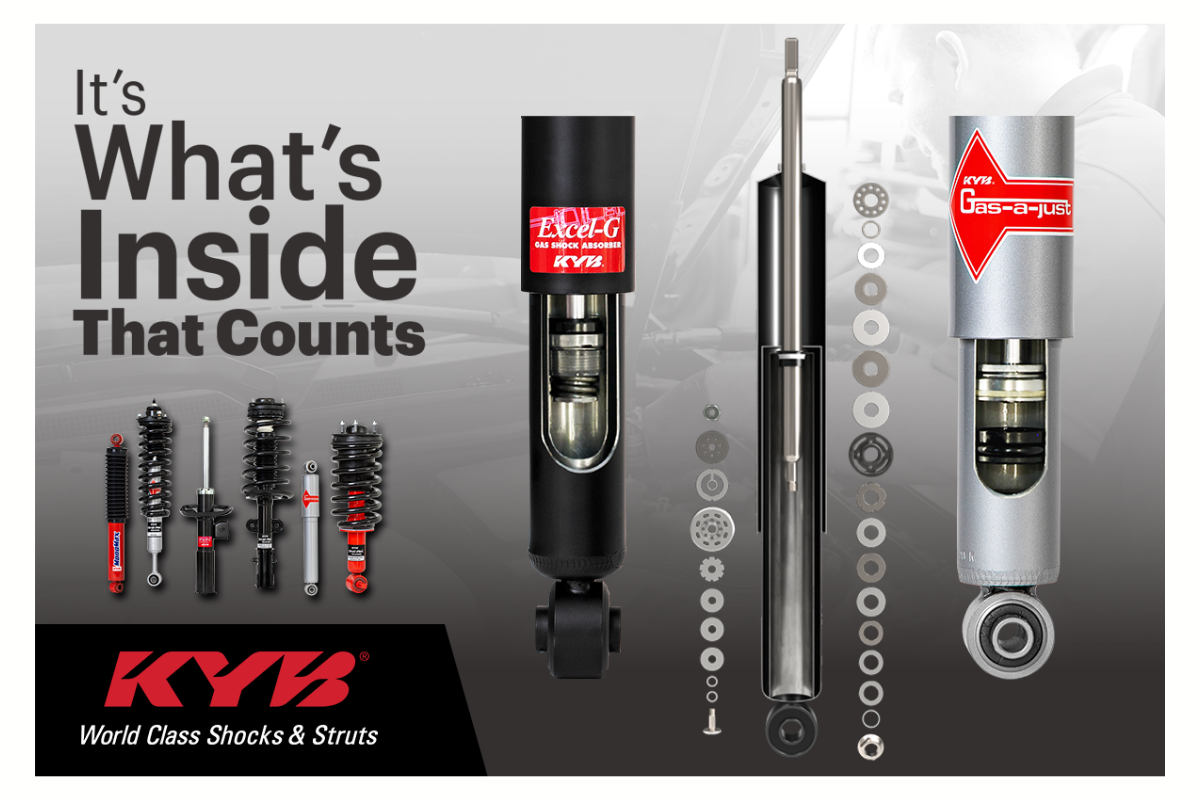
Well, it’s what’s inside the shock that makes the difference. The most important component of any shock is the valve, a complex series of different types of thin metal discs. These discs are assembled in different orders to create a valve code. There are separate codes for each valve in the shock, and the codes are different for every vehicle. The slightest change in the valve code can have a huge effect on handling, control and the ride characteristics and safety of the vehicle.
Let’s look at what a shock does. Shocks and struts are more important and much more complicated than most people realize. Shocks, struts, tires, brakes, and steering components all work as a system to provide vehicle control. OE Manufacturers design each of these parts to work in conjunction with each other to provide maximum road traction, and traction is critical to vehicle control and safety.
Using a part that does not match the OE Manufacturer’s design can affect traction and accelerate wear of related parts. This is critical to safety. Advanced driver assist systems are calibrated for brand new shocks that are working exactly as the vehicle manufacturer intended. If shocks are worn or under calibrated, it will take longer for electronic safety systems to perform their commands and sometimes, you don’t have that extra time or room.
In addition to control and safety, shocks and struts are a huge part of what gives each vehicle its unique ride and handling characteristics. The valve code used in a luxury car is very different than the valve code used in a truck or a sports car.
You may already know that KYB provides OE parts to several global automotive manufacturers. But KYB is more than just an OE supplier. KYB is a strategic development partner. That means we don’t just build parts for vehicle manufacturers; we help develop them.
Around the world, KYB ride and handling engineers are on test tracks with engineers from our OEM customers, tuning the ride performance and handling characteristics of the next generation of vehicles. KYB delivers ride control solutions to the OEM partners who offer a range of vehicle types from gasoline, hybrid, electric, and even vehicles with a high level of autonomy. We are there tuning the dampers to help the vehicle meet all of the performance and handling characteristics established by the OEM. This is important, because OEMs don’t share their performance and handling targets. Only companies working directly with OEM’s know how the shock is expected to work with the rest of the steering and suspension system in all driving conditions.
And it’s important to remember that OEM shocks and struts are designed to perform on vehicles with brand new parts and low miles, while aftermarket shocks and struts are generally installed on higher mileage vehicles. That’s why we tune our aftermarket shocks specifically to compensate for worn ride control system components. Our OEM design experience is the basis for our aftermarket products; That OEM product design is then customized for vehicles with real world wear and mileage. These changes to the valve codes are designed to help restore the vehicle’s original designed handling and control capabilities while compensating for the other worn components. Knowing exactly how the vehicle was originally designed to perform allows KYB to help restore that new car feel, even on higher mileage vehicles.
So just because a part looks like the original doesn’t mean it’s the correct choice. When recommending a KYB unit to a customer, you can explain that KYB products are specifically designed to help restore their vehicle’s originally designed control and handling capabilities, including vehicles with mileage on them. When you provide the correctly tuned shock or strut to your customer, they will feel the difference.
0 Comments