
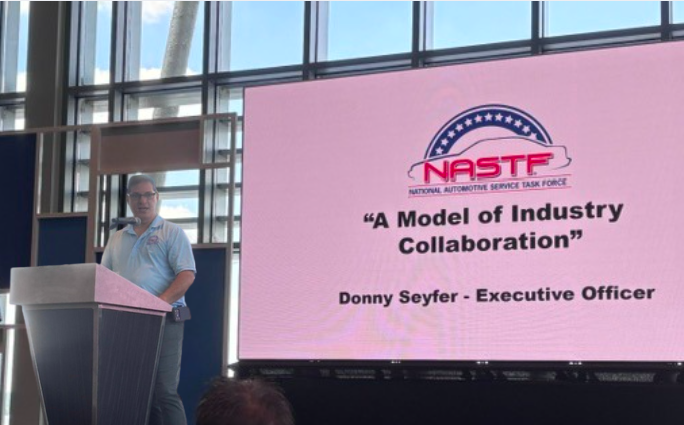
Collaboration—between automakers, the aftermarket, regulators, tool manufacturers and independent repairers—was a recurring theme at NASTF’s General Meeting at STX, held on August 19th in Washington D.C., as the organization reviewed its progress and the challenges still facing the industry.
Donny Seyfer opened with a look at the Environmental Protection Agency as a model for what effective industry collaboration can accomplish. The discussion provided a broader context for NASTF’s own mission: bringing stakeholders together to identify gaps in service information, tools, training and access, then work toward practical solutions.
The keynote speaker was Dr. Anuja Sonalker, Founder & CEO of STEER Tech, discussed the direction of vehicle automation and the impact on the aftermarket. Anuja emphasized that the industry is entering a new era as vehicles become increasingly connected. “Autonomy is no longer science fiction,” she says. But as the industry is rapidly discovering as the industry has become software-defined and autonomous, Anuja continues, “the best techs are not just ‘software people'”. It’s those who are not just watching the transition; it’s about embracing and servicing it. “When people talk about autonomous vehicles, they ask who’s driving. We should also ask who will keep them running.”
A significant portion of the meeting focused on NASTF’s ongoing work with OEMs to expand access for independent repair shops. Updates covered progress—and remaining challenges—with Subaru, Kia, Hyundai and Genesis, Mercedes-Benz, TRP, Rivian and Tesla. While each automaker presents its own processes and requirements, NASTF’s role is to help create a more consistent path for independents to obtain the information and tools they need.
Training initiatives also received a status check, with NASTF continuing to develop resources intended to help technicians navigate an increasingly complicated repair environment. The organization’s Learning Center, for example, aggregates OEM and industry training resources for aftermarket professionals.
Rusty Russell, the NASTF Director of Strategic Relationships, took on the topic of training initiatives.
With vehicle and vehicle information security being a high-level topic as of recent, Rusty focused on NASTF’s Scan Tool Validation training initiatives and the Secure Data Release Model.
NASTF’s Scan Tool Validation Program is designed to validate operators performing security-related functions, while the SDRM provides credentials that allow qualified professionals to access security information directly from automakers. (For more information, check out Indie Garage’s recent article and podcast episode on this topic here.)
The security trend discussion led to a conversation surrounding crime trends targeting locksmiths. A D.C. local technician in the audience commented that key crime has been hitting his geographic area, even rivaling the scan tool issue.
Lyle Knopf, Software Architect for NASTF, gave a comprehensive presentation on NASTF’s custom proprietary mobile app, for a stronger and more secure experience for NASTF members’ needs.
Financials and organizational updates rounded out the meeting- key notes being an approximately 17% net overall revenue growth YoY in total revenue, with operating expenses climbing as membership grows.
Final thoughts and larger takeaways were reiterated: as vehicles become more connected and security-sensitive, collaboration and cooperation—and finding workable ways to give legitimate repairers access without compromising vehicle security—will remain central to NASTF’s mission.
0 Comments