
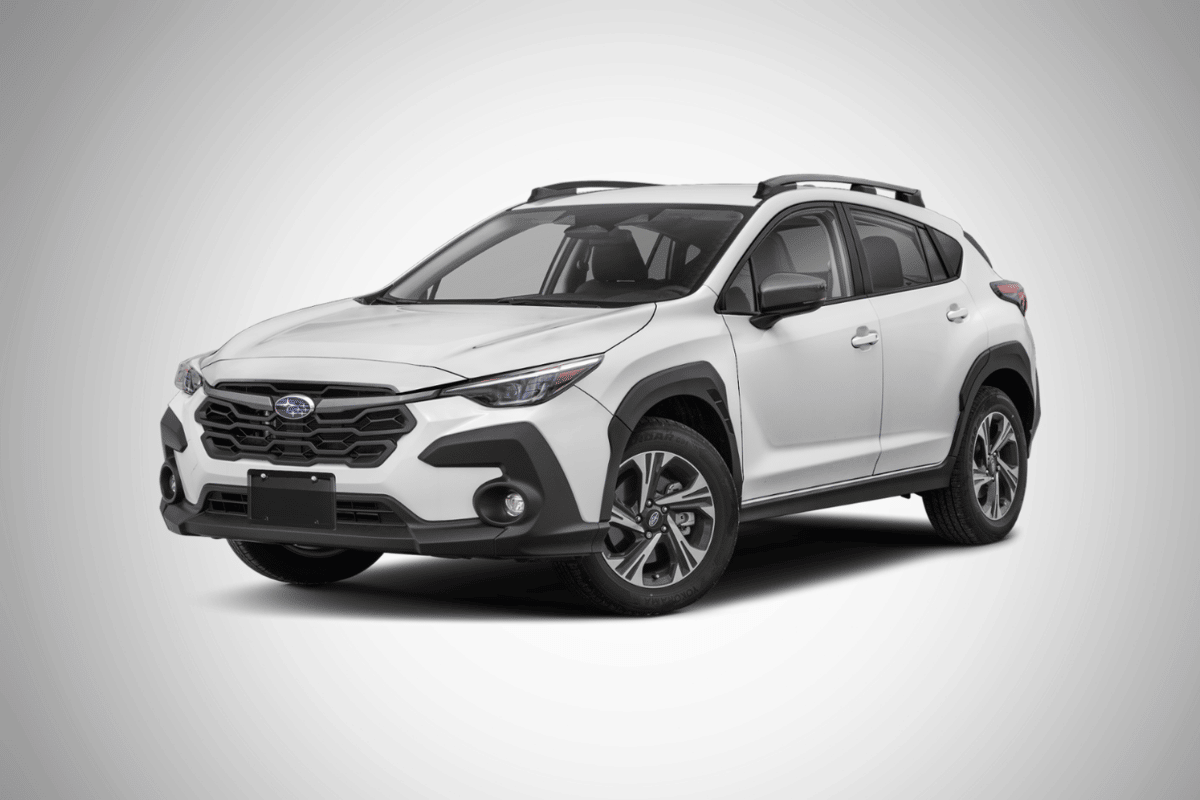
A Subaru Crosstrek like that pictured may not seem like a truck, but the roots of the trend that made it a top-seller are rooted in the significant shift from passenger cars to light trucks and SUVs, even if a lot of the modern-day SUVs are a lot smaller than the ones that started the trend.
For many veterans of the aftermarket, the 1990s don’t seem all that long ago. It was the decade when light trucks started to become more than work vehicles and pickups. Sport utility vehicles were gaining traction, minivans were booming, and a new category—car-based crossover utility vehicles (CUVs)—was beginning to emerge.
At the time, passenger cars still dominated Canadian roads and new vehicle sales. Pickups, despite the Ford F-Series’ perennial position as Canada’s best-selling vehicle, were the exception rather than the rule.
For the aftermarket, however, the shift was already becoming apparent. Shops were seeing more SUVs, new suspension and drivetrain configurations, and growing demand for accessories. The trend was significant enough that the magazines I worked on at the time began publishing dedicated Light Truck issues to help readers keep pace with a rapidly changing market.
By 2009, light truck sales had officially surpassed passenger car sales in Canada. There has been no looking back.
Today, the definition of a light truck includes everything from compact crossovers to full-size pickups and large SUVs. In practical terms, nearly every passenger vehicle that isn’t classified as a traditional car now falls into the light truck category.
Just as importantly, the segment is no longer the preserve of the Detroit Three. Thirty years ago, “light truck” largely meant domestic pickups, full-size SUVs and vans. While Ford, General Motors and Stellantis continue to dominate the pickup market—with the Ford F-Series extending its decades-long reign as Canada’s best-selling vehicle—the growth of compact and subcompact crossovers has fundamentally changed the competitive landscape. Today, Toyota, Honda, Hyundai, Kia, Nissan, Subaru, Mazda and Volkswagen all have major players in the light truck market. The Toyota RAV4 has become Canada’s best-selling passenger vehicle, while the Honda CR-V, Hyundai Tucson, Nissan Rogue and Subaru Crosstrek are consistently among the country’s top-selling models. For many independent repair shops, a compact crossover is now just as likely to wear a Toyota, Honda or Hyundai badge as a Chevrolet, Ford or Jeep emblem.
The result is a vehicle parc that is not only overwhelmingly light truck, but also far more diverse than it was a generation ago. That has important implications for independent repair shops, from parts inventory and supplier mix to technician training, diagnostics and ADAS calibration.
The numbers tell the story.
According to Statistics Canada, Canadians purchased nearly 1.86 million new light vehicles in 2025. More than 1.62 million were classified as trucks—including SUVs, crossovers, pickups and vans—while passenger car sales totalled approximately 234,000 units, representing just 12.6% of the market. Compared with 2019, truck sales have continued to grow while passenger car volumes have steadily declined, further reinforcing the shift in Canada’s vehicle fleet.
That trend continued through the first half of 2026. DesRosiers Automotive Consultants (DAC) reports passenger car sales declined 6.6% year over year, while light truck sales slipped a more modest 2.1%. As a result, light trucks accounted for 87.8% of all new light vehicle sales in Canada, leaving passenger cars with just 12.2% of the market.
There were still bright spots among cars. The intermediate passenger car segment posted a 24.0% sales increase, helped by strong demand for the Toyota Camry and Prius. But overall volumes remain relatively small compared with the SUV and pickup market.
Among light trucks, large SUVs gained 11.5%, led by models such as the Dodge Durango and Chevrolet Suburban. Small vans also remained in positive territory, up 9.0% for the first half, while Canada’s largest volume segment—compact SUVs—eased 4.3%. Large pickup sales declined 5.8% but continue to represent one of the country’s largest vehicle segments.
At the opposite end of the spectrum, the subcompact car segment continues its steady disappearance. Sales plunged 64.3% in the first half of 2026, with fewer than 2,000 units sold and only two models remaining.
“While June itself saw some sales growth, the first half of this year had largely been a challenging time for new vehicle sales,” said Andrew King, Managing Partner at DAC. “At the segment level, the greatly diminished and thus increasingly volatile passenger car side of the market bookended the lineup of sales performances.”
For independent repair shops, the takeaway is clear. Canada’s vehicle fleet is becoming increasingly dominated by SUVs, crossovers and pickups from a broader range of manufacturers than ever before. As these vehicles move through the aftermarket, shops that invest in the right training, tooling and inventory will be best positioned to meet the needs of a rapidly evolving vehicle parc.
0 Comments