
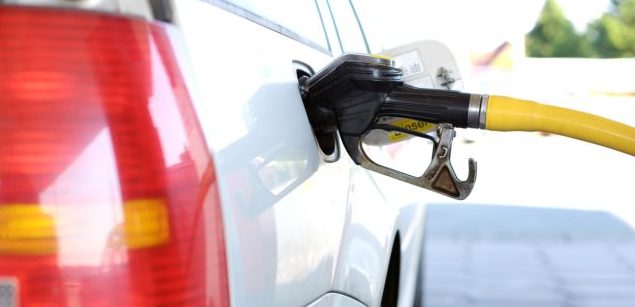
Aftermarket traditionalists are used to tracking driving habits in close proximity to the price of gas. That lock-step relationship may never have existed as closely as thought, but a real disconnect seems to be taking hold.
Case in point is the recent research brief from DesRosiers Automotive Consultants (DAC) that saw kilometers driven stable, even in the face of rising prices at the Canadian pump as a result of the U.S. war with Iran.
For the aftermarket, the kilometers driven has become a shorthand for service demand; the more Canadians drive, the more service they will seek, and vice versa. And at points in the past, sudden increases in the price at the pump would precede real, immediate impacts at the service bay.
But the current marketplace would seem to have disconnected from this previously accepted dynamic.
“This recent rise in gasoline prices was an unfortunate challenge for many Canadians on top of the stresses of the U.S. initiated trade war,” commented Andrew King, Managing Partner at DAC. He continued, “Kilometres driven, however, have remained relatively stable so far in 2026, providing a solid underpinning to the automotive aftermarket.”
It is of course not in isolation as King points out – other factors such as inflation (though moderating) and a degree of uncertainty arising from the currently fraught trade relationship between Canada and the U.S, — and also include a rising but still small proportion of the car parc that has moved to ZEV electric options. That figure stands at 4.0% of light vehicles on the road, not including traditional non-plug-in hybrids.
Still, Statistics Canada reports in volume terms that sales at gasoline stations and fuel vendors rose 4.2% in June, though sales in dollars were down about the same amount (4.1%) onth over month, posting their first decline in four months.
Year-over-year figures do reflect a 20.2% increase in dollar sales.
There are plenty of statistical modeling reports that will show that the relationship between the price at the pump and driving habits is not one-to-one and is more like a 10-to-one – a 10% increase in the cost of fuel resulting in a 1% reduction in fuel use/km driven.
But even that admittedly modest impact seems to not be at play in the current environment.
This is good news in general for the aftermarket, but not without it’s knock on impacts and concerns over affordability that anecdotally are playing out at the service advisor desk.
Still, the buoyancy of the Canadian automotive business in the current environment is worth noting.
Unsurprisingly, the standout in terms of automotive retail sales in the first half of the year according to the DAC brief were gasoline stations which saw retail sales rise 13.3% over the first half of 2026, driven by the spike in gasoline prices.
Other part of the sector saw more modest single digit growth.
New vehicle dealers saw a minor 0.8% increase in the first half of 2026, remaining at record highs from a dollar value perspective.
Automotive parts, accessories, and tire stores saw a slightly larger 1.3% increase. At the same time, used vehicle dealers saw a 2.4% increase in retail sales as compared to the first half of 2025.
0 Comments