
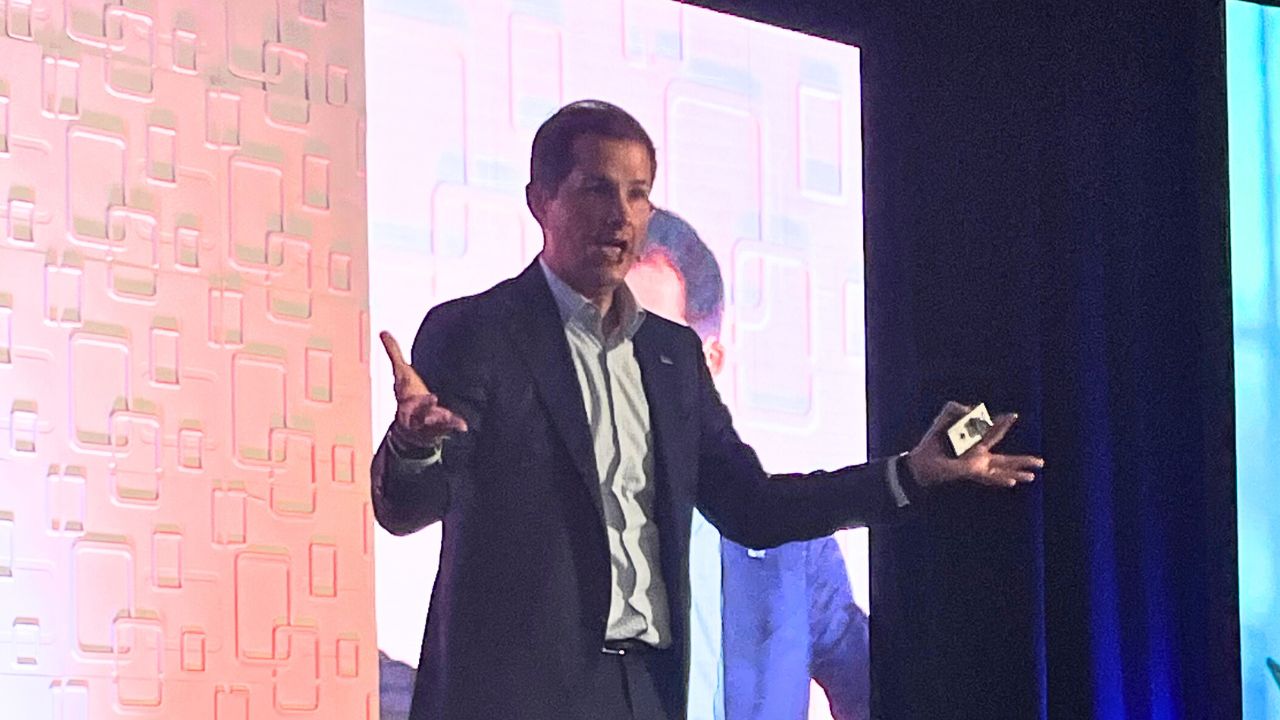
A growing push among Canadians for greater economic independence may help accelerate long-standing efforts to implement national Right to Repair rules, according to pollster David Coletto.
Speaking at the Canadian Auto Care Industry Conference in Toronto, Coletto, CEO of Abacus Data, suggested the political and economic climate in Canada is increasingly aligned with policies that support domestic control over technology, data and supply chains — all issues closely tied to the automotive aftermarket’s right to repair movement.
Progress has been made in Canada on some foundational legislative work that sets the stage for potential Right to Repair across Canada, but while the Province of Quebec currently has a Right to Repair in place under the guise of a consumer protection move — one that specifically details handling of automotive repairs — a federal Right to Repair rule remains elusive.
Following a presentation on Canadian public opinion on politics and the economy, Coletto was asked how the shifting political landscape could affect the automotive service sector and its policy priorities. The discussion comes at a time when Prime Minister Mark Carney continues to enjoy high approval ratings domestically while tensions with the United States — and with Donald Trump in particular — continue to shape Canadian public sentiment.
According to Coletto, affordability remains the dominant issue for Canadians. “When you ask the public what the top issues facing the country are, affordability is the number one,” he said, noting that many voters are less focused on relief and more concerned about protecting themselves from further financial pressure.
But beyond affordability, a broader theme is emerging in public opinion: sovereignty.
“The word that is used most is sovereignty,” Coletto said. “Data sovereignty, economic sovereignty, food sovereignty. Everybody wants it.”
For the automotive aftermarket, that mindset may create a favourable environment for policies that ensure independent businesses maintain access to vehicle repair data and systems.
Coletto noted that concerns about global automakers controlling access to vehicle computers and data align closely with the public’s broader interest in reducing dependence on external sources — particularly the United States.
“Whether we’re talking about global automakers having a monopoly on access to a computer in my car, or the data that’s in that car, it’s aligned with the same conversations happening around how we make Canada less reliant on the United States and more self-sufficient,” he said.
For independent shop owners and aftermarket suppliers, that framing could help strengthen advocacy efforts around right to repair legislation.
Coletto added that the current federal government appears responsive to public demand for policies that support Canadian self-reliance. However, competition for political attention remains intense across industries.
His advice for small businesses and industry advocates: focus on demonstrating economic impact.
“Government is operating with a mindset of ‘show me the return,’” he said. “If what you’re asking for doesn’t deliver a multiple back in investment, growth and jobs in Canada, it’s harder to get attention.”
That argument may resonate strongly for the automotive aftermarket, which employs tens of thousands of Canadians in stable, skilled trades.
As debates around economic sovereignty and supply chain resilience continue, the industry may find its right to repair message increasingly aligned with the broader national conversation about keeping control of Canada’s economic future.
0 Comments