

(SPONSORED CONTENT)
Most vehicles coming into your shop likely have some sort of mechanical failure, or are due for routine maintenance. It’s obvious when tires and brakes wear out, or the car is not running correctly, but are you missing an opportunity by not inspecting the vehicle’s ride control system for wear at the same time?
Most technicians know that replacing shocks and struts is worth doing, but may not know when or how to suggest new dampers. They likely never check a shock’s performance beyond a simple visual inspection for leaks or damage. The majority of vehicles in the junkyard still have their original suspension components installed, and that’s a missed opportunity for your business.
Over a vehicle’s lifetime, drivers may not notice the growing harshness over bumps, extended stopping distances, excessive body roll, and lack of steering response since shocks and struts wear gradually. Many drivers won’t realize how they’ve adapted their driving style to compensate for worn suspension. They may be subconsciously driving over bumps differently to avoid harshness or rattling components, changing their braking points to account for more nosedive, or other behaviors that compensate for worn suspension components.
If the shocks, struts, and springs are worn, the electronic safety systems won’t be performing like they were designed, and their calibration could be off due to worn springs and bushings. Basic and advanced systems like ESC, ABS, and ADAS rely on mechanical components like tires, brakes, and suspension components to be functioning properly. Worn suspension means the vehicle won’t be as responsive to driver inputs, and the systems built to assist drivers and add safety will be compromised. Customers could be leaving your shop in an unsafe vehicle if shocks and struts are ignored.
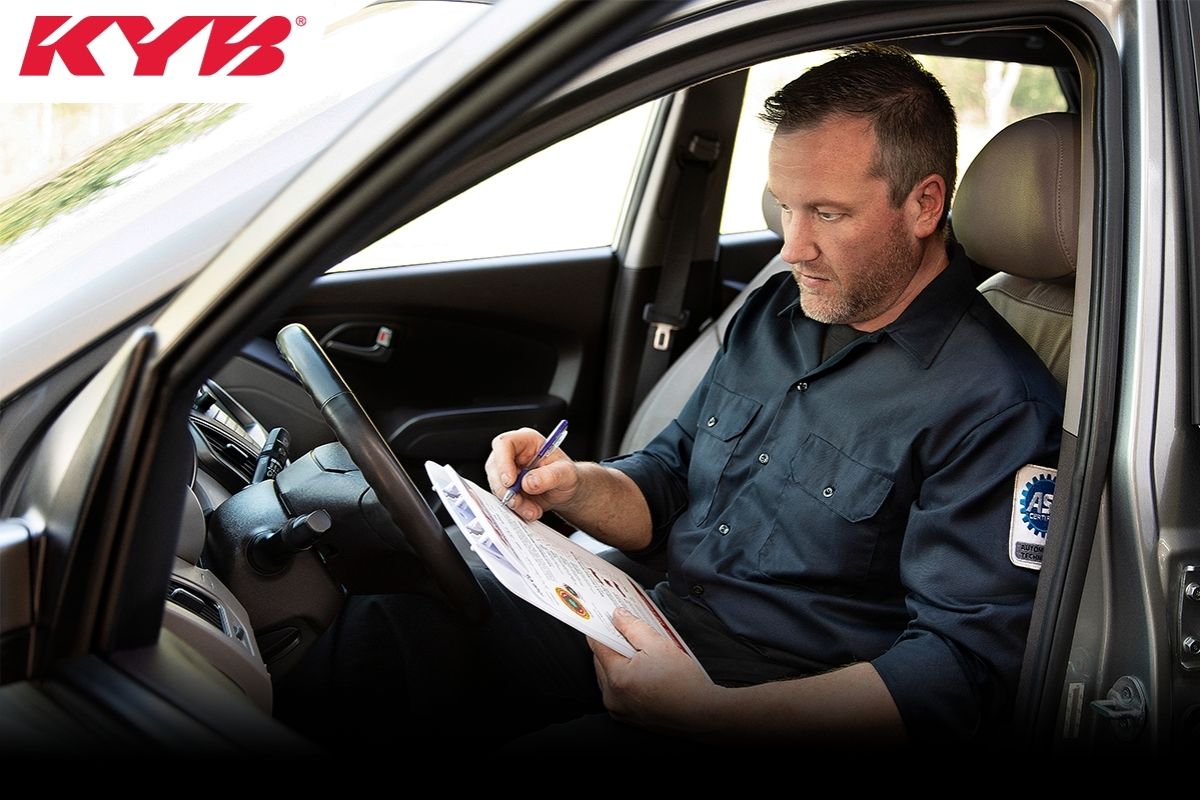
For technicians, the challenge is how to determine wear on parts that don’t always have external indicators that would be seen during a visual inspection. Instead, determining the amount of wear on suspension components can be done most effectively with a road test. Using a repeatable set of simple maneuvers on an established route can help give you confidence and reliable evidence to have a ride control replacement conversation with customers. In a conversation, it may be worth asking customers if their vehicle is performing the way it did when it was new.
You can expand on that with a follow up question of what the most noticeable changes have been. Taking them along on quick road test can get them thinking and taking an honest approach to their vehicle’s performance. Pointing out how the vehicle is designed to handle and feel during the test can help them understand how worn their components are. It then becomes much easier to recommend high quality replacement suspension parts. The conversations and road tests are some simple steps to help them drive a safer vehicle.
Remember that all four corners will likely need attention. Installing just the front or rear suspension components will only accentuate how worn the rest of the suspension is, and that’s something your customer will immediately notice. Installing high quality suspension components on all four corners of a vehicle can bring back control and driver confidence, plus it can add to customer satisfaction with your shop.
KYB OE replacement shocks and struts are engineered to help restore a vehicle’s original designed ride control and compensate for other worn suspension components. Excel-G and Strut-Plus are well known for being the right OE replacement choice for many of your customers. KYB’s Gas-a-Just and MonoMax product lines are monotube upgrades that can increase handling and control, especially in demanding conditions.
Pairing quality shocks and struts with new brakes, and/or new tires, can really help bring a vehicle back to life. It’s a great strategy to make a vehicle much safer. Having the confidence to start a ride control conversation with your customers can help them protect their investment and enjoy driving their vehicle again.
Show some love to the vehicle’s four corners, and your customers will enjoy the road in a safer and more responsive vehicle. Love the corners.
0 Comments